A peculiar virtue in wildlife ethics is that the hunter ordinarily has no gallery to applaud or disapprove of his conduct. Whatever his acts, they are dictated by his own conscience, rather than that of onlookers. It is difficult to exaggerate the importance of this fact. - Aldo Leopold

Sunday, February 12, 2012

Onion Creek Juniper Clearing

I got to spend almost four hours yesterday in the afternoon working at the Onion Creek Water Quality Protection Lands in Hays County. The day started a bit cold with lows in the thirties, but by 1 pm it had warmed up enough to be comfortable to work outside as long as your dressed warmly.

I was part of a team of about 15 Hays County Master Naturalists, led by Tom Watson, and we worked to clear Ashe Junipers at two different sites on the property.

The junipers are native, but they originally grew on rocky hillsides and ravines. They have spread beyond their original confines, due to overgrazing of grasslands and suppression of wildfires as our land became settled. They compete for water with grasses and other trees. The City of Austin is restoring the Water Quality Protection Lands to grasslands in order to enhance their ability to filter and recharge water in the aquifers. The junipers are also known locally as "cedars" and cause the dreaded allergy, "cedar fever". Cutting the tree down below any green needle will kill it. Typically, we cut it down at the ground.

Removing a small juniper
The first site we worked, along Onion Creek, had been cleared of large junipers by our chapter. We swept along the bank looking for any seedlings or "re-sprouts". Since the large junipers have been cleared, the berries have a chance to germinate and if not regularly cleared, in only a few years, the area will once again have a juniper problem. While very easy to nip with lopping shears, the seedlings can be hard to see.

It was nice to see Onion Creek had water in it, because it was dry the last time I saw it. The recent rains have helped, but are not enough. The water is also muddy indicating we're seeing erosion upstream.

A view upstream
And downstream
The second site we worked was adjacent to a stock tank and had not recently been cleared because the trees were larger and harder to take out with just our lopping shears.

It was a beautiful afternoon to spend working outdoors. As Tom summarized, "We laid down a lot of wood"  yesterday and I'm glad I was able to help!


Sunday, February 5, 2012

Bunton Branch Restoration

Last October, Mary and I volunteered at one of our Chapter's projects, the Bunton Branch Restoration.

The project is located on 35 acres of City of Kyle parkland. The park property was acquired in 2008 when the developer of the Seton Hospital and retail stores surrounding it presented the City a concept plan. The Kyle Parks Committee and City Council accepted the parkland dedication shortly after that. Bunton Branch Creek was realigned due to the construction of the Dacy Lane bridge. The project involves restoring the land to its natural state and helping with the maintenance of the parkland.

The project’s main objectives are:
  • Restore the portion of Bunton Branch Impacted by Construction
    • Plant native vegetation
      • Harvest saplings and other desirable vegetation from undisturbed areas of the creek and  replant in the area affected by construction
    • Solicit donations from local nurseries for native trees and vegetation
  • Help The City of Kyle to Maintain Parkland
    • Trash removal
    • Identify and remove invasive plant species
      • Recruit help from experts on plant identification
    • Begin erosion control plan
    • Remove creek obstructions
  • Help The City of Kyle with their vision for the Park
    • Plan garden space and water system and help to build it
    • Plan nature trail to an outdoor classroom and help with building it
    • Tag, identify and map trees
      • GPS trees, log tree type and create a map for future parkland planning
We joined project leader Kimberly Pankratz as well as fellow Master Naturalists Tom Watson, Linda Land, and Dick and Judy McBride. The group worked to identify, tag and record the GPS coordinates of trees, and trash pickup.
Examining an invasive Chinese Lantern.
It was nice to see a bit of water in the creek and several of us observed how different the soil and plants are east of I-35. The most common tree along the creek was the Bois D’Arc (Maclura pomifera) and many still had fruit on them. The Bois D’Arc are relatively rare in the rockier soils of western Hays County. Also common were cedar elms (Ulmus crassifolia). 

Kimberly also gave the group a tour and overview of the park and the work ahead.

Sunday, January 29, 2012

That's A Lot Of Seedballs!

Our Hays County Chapter of the Texas Master Master Naturalists recently participated in a neat project which I think exemplifies the kind of work we do and the spirit of our members.

The Healing Hands Healing Lands project was created in the aftermath of last year’s devastating Bastrop wildfires. The best summary comes from the project’s web page:

“This project has been initiated to support those who have suffered loss of homes, lives, pets, and farm animals in areas of Central Texas recently damaged by wildfires. We will act to aid and accelerate "healing" of the natural ecosystems by providing seed balls containing native flower, grass, and other plant seeds normally found in the affected areas. All seed used will be provided by Native American Seed Company and selected and blended for its suitability for those areas. We hope to broaden involvement of the young people in our surrounding communities in this effort. Finally, we see this as an important youth education opportunity to teach younger citizens about the importance of re-establishing the correct native plants in the area's various ecosystems."

Several organizations were involved in the project:
  • Native Plant Society of Texas (NPSOT): Austin, Williamson County, LostPines (Bastrop) chapters
  • Master Naturalists: CAMN (Travis), Goodwater Williamson), Lost Pines(Bastrop), Hays chapters
  • Master Gardeners: Travis and Hays Counties
  • Others: Habitat Stewards (Austin), Taylor Garden Club, and Crown Garden Club of Rockdale (Milam)
The project plan was to make as many seed balls as possible to distribute to fire victims by the end of 2011. The seeds are from more than 50 varieties of plants found in the Bastrop area, such as Little Bluestem, Black-eyed Susan and Indian Blanket. Each ball has nine or 10 seeds and should grow with a little water. The volunteers mixed the dry ingredients, added water, and rolled around 350 seed balls per bag of dry mix. They processed a total of 477 bags of dry mix, which resulted in approximately 165,000 seed balls, or a little over a ton!

Their work also involved boxing the completed seed balls for distribution. An event was held in Bastrop on January 13th to distribute seed balls.

The Healing Hands Healing Lands is a wonderful, and very visible, example of the work our chapter conducts. It combines ecological restoration, public outreach, and education.

Sunday, January 22, 2012

A Turkey Trot

I recently bought a Bushnell Trophy Cam Night Vision Trail Camera. The camera is motion-triggered and takes color photos in daylight and infrared photos at night. It has an infrared flash unit.

I set it up near one of our rainwater collector water dishes, which I've posted about before. I'm curious to see what wildlife is coming to the water dish. I swapped out the camera's flash card after a week and brought the card back to my computer to see what it had recorded. It had shot about 82 photos and here's some of the best.

First, is a great shot of a Rio Grande Wild Turkey. We usually only hear them and spotting one is a rare treat. Interestingly, it's not drinking water, but just walking by the dish which is located along a dirt road. The timestamp shows the photo was taken about 2 pm.


Next, is a night time, infrared shot, of three feral pigs. This photo was taken about 9 pm. It shows two pigs at the water dish and a third one on the left. There were about 6 photos of feral pigs, but this is the best one.


Finally, here is a night time photo of a cottontail rabbit. It was taken about 6:30 am. There were many photos of rabbits, both cotton tails and jack rabbits.


Sunday, January 15, 2012

A Wet December

We finished 2011 with a much wetter than average December. I recorded 6.2 inches of rain at our house which happened over 11 days, fairly evenly distributed throughout the month. This was the wettest December since I started tracking the rainfall in 2007. The next highest December total was 3 inches in 2009.

While it was nice, it did little to break the drought we're experiencing. The total 2011 rainfall at our house was 20.5 inches. The average in our part of Texas is about 33 inches.

Here's our monthly rainfall chart.

The Federal government maintains a drought tracking web site, called the National Integrated Drought Information System. You might find it interesting to see how severe the current drought is.

Here's today's version of their overview. Central Texas is in 'Extreme' drought.


The outlook through March 31, 2012 is for the drought to persist with little change.

Sunday, January 8, 2012

Jacob's Well Natural Area

Mary and I helped conduct a tour of the Jacob's Well Natural Area for the Lost Pines Chapter of Master Naturalists back in October.

Once considered a sacred area by the Native Americans, Jacob’s Well is a natural spring and is believed to be the longest underwater cave in Texas. It is the primary source of water for Cypress Creek which flows through Woodcreek and Wimberley and then into the Blanco River.

The entrance to the well

The Jacob’s Well Natural Area is located at 221 Woodacre Dr. in Wimberley. The Natural Area consists of 55 acres owned and managed by the Wimberley Valley Watershed Association. A map is available here.

The WVWA is a non-profit organization dedicated to protecting the region’s water quality and quantity by promoting sustainable watershed management through education, conservation, and land protection. You can find out more about the WVWA at their web page.

Looking downstream along Cypress Creek from the well
Our chapter members participate in habitat restoration which involves removal of impervious ground cover (which is mostly complete) and identifying and marking native plant and wildlife for the benefit of the public. Our members also identify and manage the invasive species and help develop a long-term habitat management plan. Other work includes extensive trail building and serving as docents for public tours.

Other activities at the center include science and research.  There is on-going research and exploration of the well, monitoring of water quantity and quality, and studying the effects of land development on the well and aquifer. There is a USGS monitor station at Jacob’s Well. You can see the real-time data here.

Research divers emerge
Jacob's Well is a beautiful place and most people have never heard of it. You should try to visit if you're in the area. You'll be impressed.

Sunday, January 1, 2012

Checking Nestboxes

We went for a hike today and checked the bluebird nestboxes while we were out. It's not nesting season, which is in the spring, but it's good to get in the habit of checking them. We try to make the rounds about every two weeks. Even though the bluebirds aren't nesting, other bird species or animals may decide to use the boxes and it's worth checking them.

I've posted about the bluebird nestboxes before. They're built so that you can easily open a door and look inside. At some point, hopefully, we'll find a nest inside and be able to count any eggs.

All eight boxes were empty, but some appeared to have been visited. One had bird droppings in it. Several showed signs of occupancy because the wood shavings at the bottom were concave and piled up around the edges. You can see the concavity in this photo.

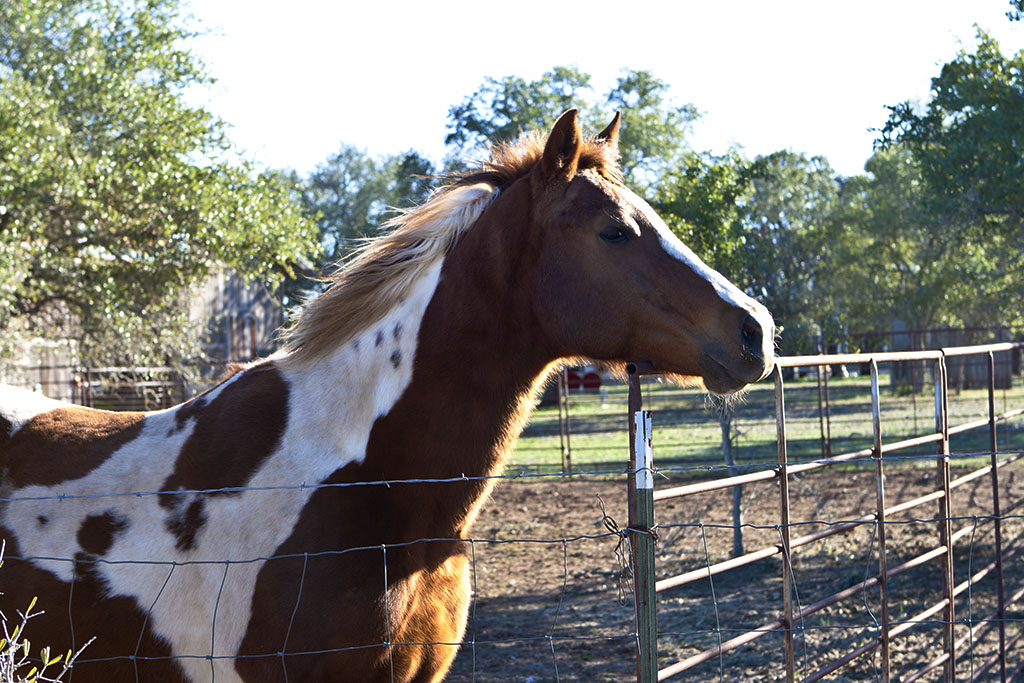
Our nestbox trail goes by our neighbor's corrals and one of their horses came over to see what we were doing. Unfortunately, we didn't have any carrots or apples for him, but he was quite friendly. We'll  have to remember to bring a treat next time.